Journal · Hosting · Oct 14, 2026
A dinner party plan for eight that leaves you time with your guests
A workable prep schedule, menu test, shopping list and host timeline for a relaxed dinner at home.
By Nexora Vault
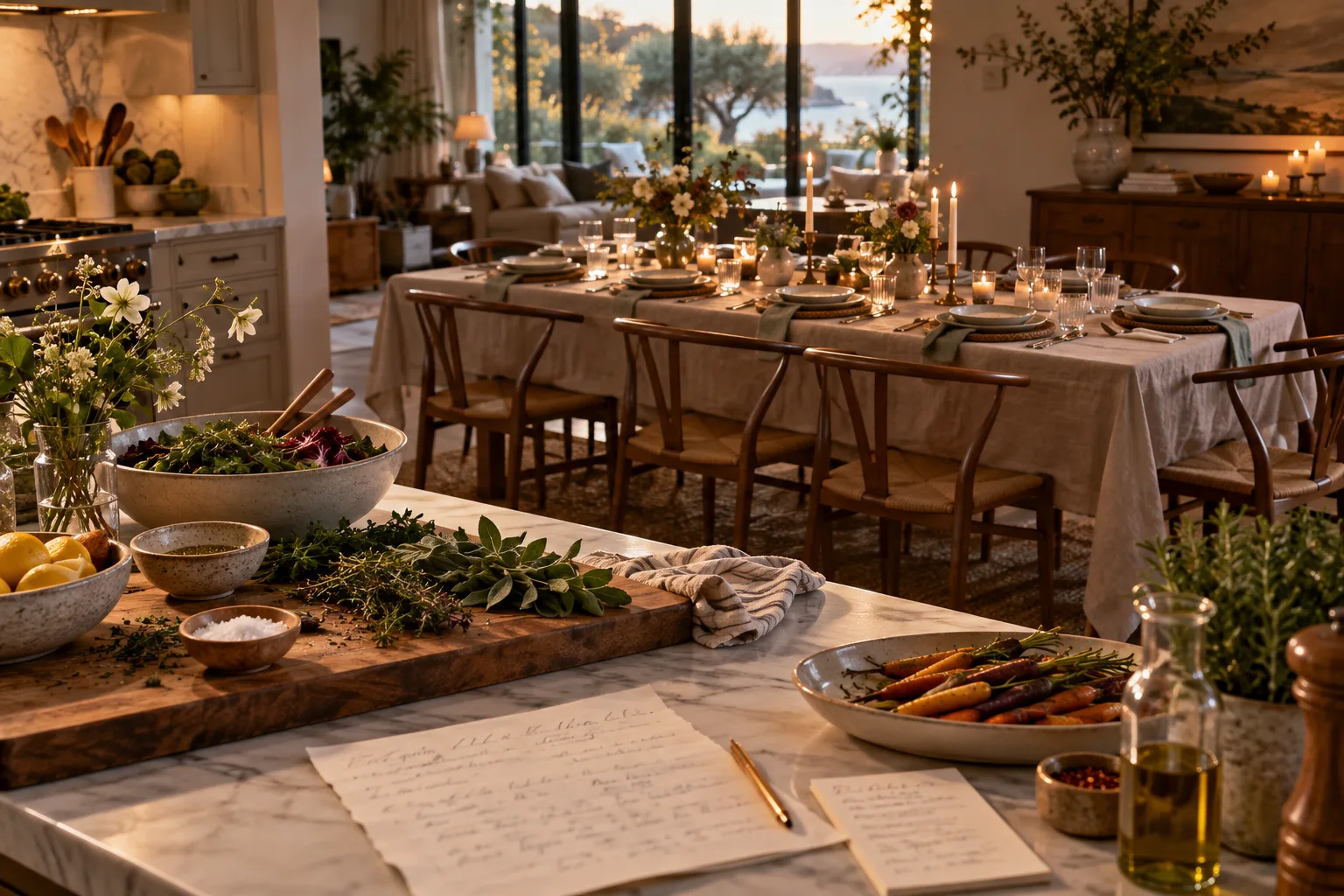
A dinner for eight can be generous without becoming an eight-hour performance by the host. The trick is to decide what must happen while guests are there, then move everything else earlier. If the main course requires six pans and constant attention at 7 pm, the menu needs changing more than the host needs to move faster.
This is a flexible plan for a 6:30 pm arrival and a 7:15 pm meal. Change the times to suit your home, guests and recipes. It gives you a decision method, a worked example and a checklist you can copy into a note. You can use it without buying a template or cooking any particular dish.
Start with the people, not the menu
Confirm the guest count, arrival time, seating space and whether anyone needs a step-free route or a quieter seat. Ask privately about allergies and other food needs before you promise a menu. An allergy is different from a preference: check every ingredient and preparation surface with the guest rather than assuming that removing the obvious ingredient makes a dish safe. If you cannot prepare something safely, say so and agree on a reliable alternative. Keep ingredient packaging until the meal so you can answer questions accurately.
Decide the shape of the evening: one long table, a buffet, or a casual meal with seats in more than one room. Count actual chairs, plates, cutlery, glasses and serving utensils. Eight guests may mean nine people at the table if the host is eating too. Check that everybody can reach water and that a shared platter has a place to land.
Use the last-minute test to choose a menu
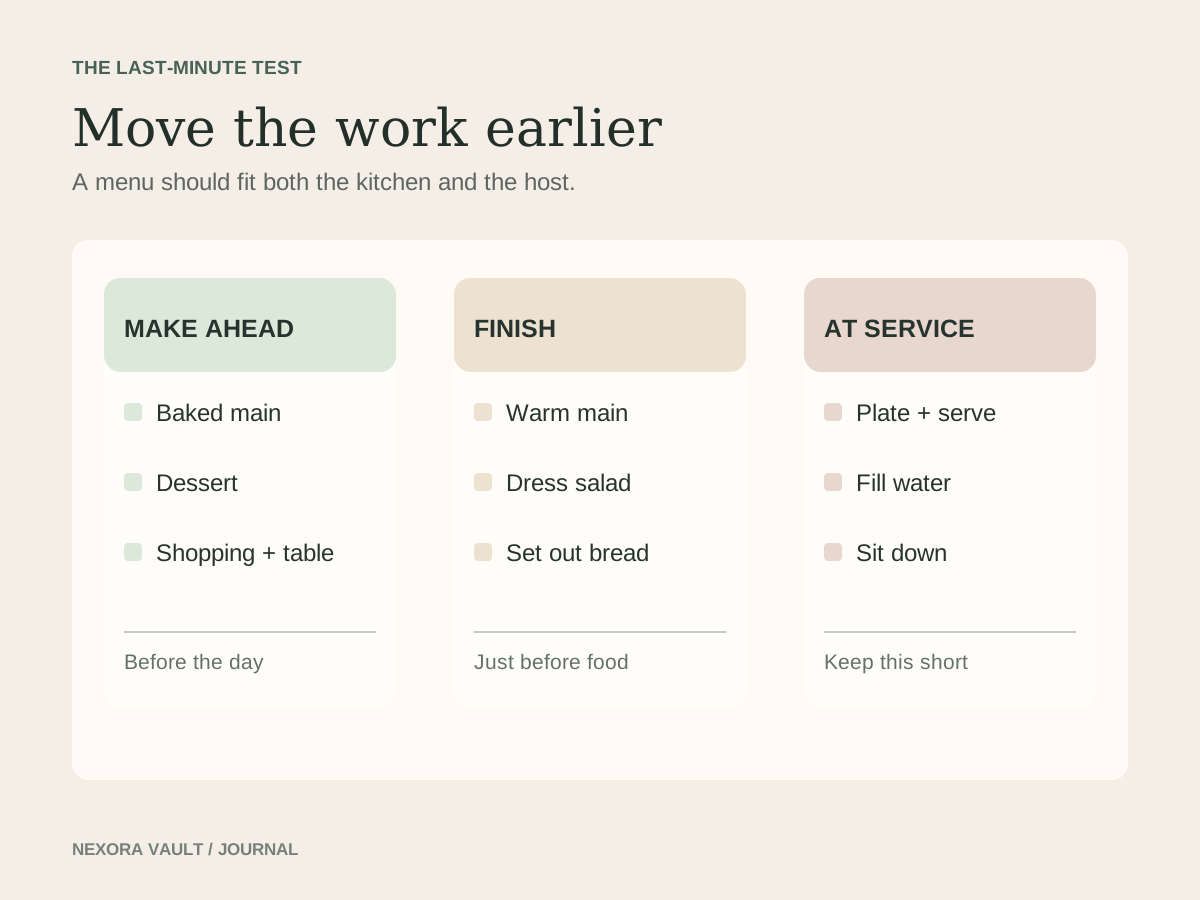
Write every dish in three columns: make ahead, reheat or finish, and must happen at service. The third column is your bottleneck. Choose a main you can largely prepare in advance, one side that waits well, and a dessert that is ready before the doorbell. Buy bread, fruit or a simple snack if that removes a stressful cooking step. A good menu has enough variety for guests, but it does not need several simultaneous showpieces.
Here is one example of workload, not a recipe or portion guarantee: a baked vegetable and bean dish assembled the day before; a grain salad with dressing held separately; bread and a green salad; and chilled fruit with a purchased dessert. If a guest needs a different meal, plan its ingredients, equipment and serving method separately. You could swap every dish and still use the same workload test.
For each recipe, note its oven temperature, tray or hob space, active minutes, holding time and serving vessel. If two dishes need the only oven at different temperatures at 7:05 pm, the menu does not fit the kitchen. Change a dish, move one to a hob, or choose something that can be served at room temperature. Check each actual recipe's safe cooking and storage instructions; this article does not set food-temperature rules.
Build one shopping list from the finished menu
Copy ingredients from every recipe into a single list. Combine repeated items, then separate fresh food from pantry items, drinks and non-food needs. Check what is already in your kitchen before buying it again. Write the serving dish or container beside anything you will prepare in advance; a finished dish with nowhere to go can still delay dinner.
Do a physical count, not a memory test: chairs, plates, bowls, glasses, water jugs, serving spoons, napkins, bins and room in the fridge. Identify one backup for a missing item, such as a clean tray in place of a platter. Keep a little clear counter space for arriving dishes. If guests are bringing food, ask what it is, whether it needs oven space and when it will arrive. “Bring anything” is friendly but hard to plan around.
Work backward from a 7:15 pm meal
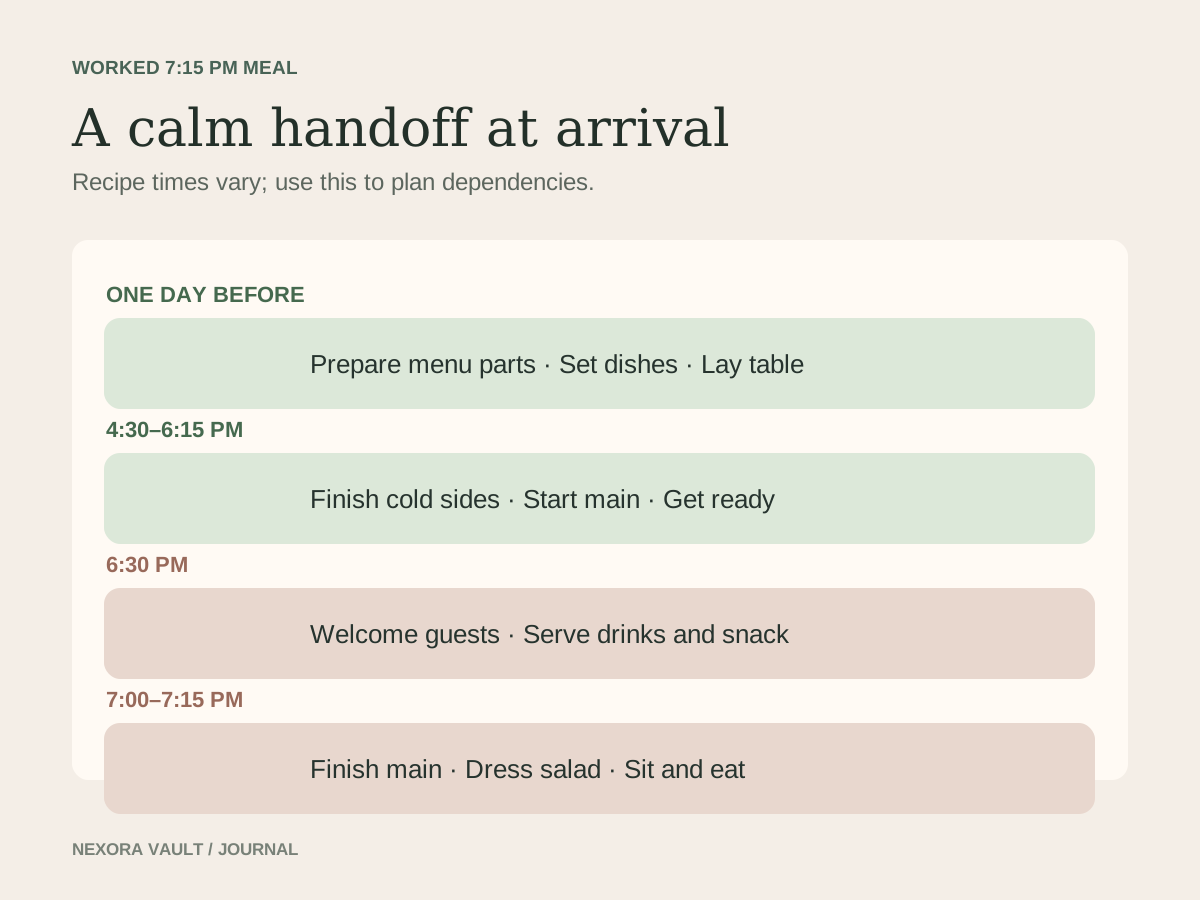
Choose a serving time, then place the tasks that cannot move: oven finish, resting time, final salad dressing and plating. Add realistic washing-up and room for interruptions. Here is a sample sequence for a menu with one baked main and two simple sides:
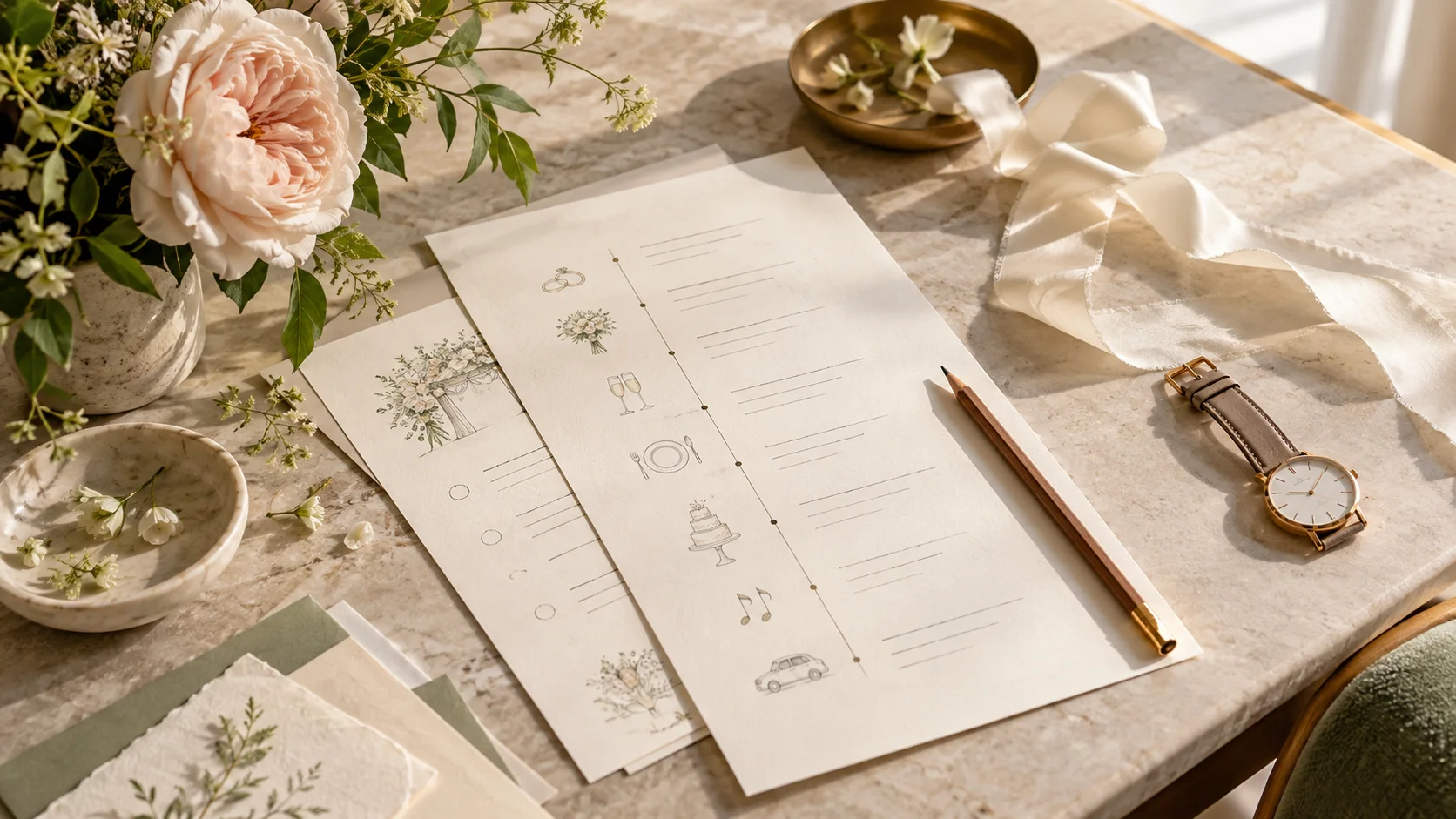
- Two days before: confirm the headcount and food needs; settle the menu; check chairs, plates and the cooking equipment. Make the full shopping list.
- One day before: shop; prepare the baked dish and dessert if their recipes allow it; set aside serving dishes; lay the table or stack the place settings. Label anything that someone else will reheat.
- 4:30 pm: clear and clean the main work area; prepare the cold side; put drinks and water in their places. Check that the fridge and oven plan still work.
- 5:30 pm: start the baked main according to its recipe. Set a timer for the next action, not only the final finish. Move the salad, dressing and bread into their serving plan.
- 6:15 pm: get changed and clear the sink. Put out a simple arrival drink and snack. The aim is to be ready for people, even if dinner still needs one finish.
- 6:30 pm: guests arrive. Give coats and bags a place. Offer water. If a guest has a food allergy, confirm their agreed meal directly rather than relying on a label someone else may move.
- 7:00 pm: finish or reheat the main, dress the salad and warm bread if wanted. Ask one person to fill water glasses or move a platter; give a specific task with a clear end.
- 7:15 pm: sit and eat. Dessert is already made or bought, so there is no second cooking rush.
These clock times are only an example. Your recipe may need more cooking or resting time, and guests may arrive late. The useful rule is that the host's active work after 6:30 should be short and explicit. If it still fills a whole hour, redesign the menu.
Make a simple host sheet
On one page, write the guest names and needs, menu, serving time, oven or hob schedule, three remaining tasks and who owns each one. Add where spare glasses and napkins are. This sheet is for the kitchen; it is not a performance scorecard. If a task can disappear without spoiling the meal, mark it optional. Fresh flowers, a complicated garnish and a second hot side often belong there.
Build in a recovery move. If dinner is delayed, put out the snack and say when the meal will be ready. If a dish fails, serve the remaining food clearly rather than hiding a substitution from someone with a food restriction. If guests want to help, offer one bounded job such as carrying water or putting bread on the table. Avoid delegating allergy-sensitive preparation at the last minute.
Let the evening continue after food
You do not need a full programme. Clear the main plates, leave water available and let conversation develop. For a mixed group, one optional ten-minute activity is usually easier to join than announcing a compulsory game. Our three low-prep dinner party games include complete rules and prompts you can use for free.
If you would rather set out prepared cards, First Spark is a free printable arrival activity. After Hours offers three separate longer experiences with a host guide for adults and older teens; check its product page for the actual contents and group size. Neither is needed to make the plan above work.
After the party, note what took longer than expected and what food or equipment you did not need. That two-minute note will make the next invitation easier than any perfect-looking checklist.