Journal · Hosting · Oct 14, 2026
A wedding day timeline that actually works: build yours around a 3 pm ceremony
An editable way of thinking about the whole day, with a worked 3 pm example, realistic handoffs and a guest-friendly version.
By Nexora Vault
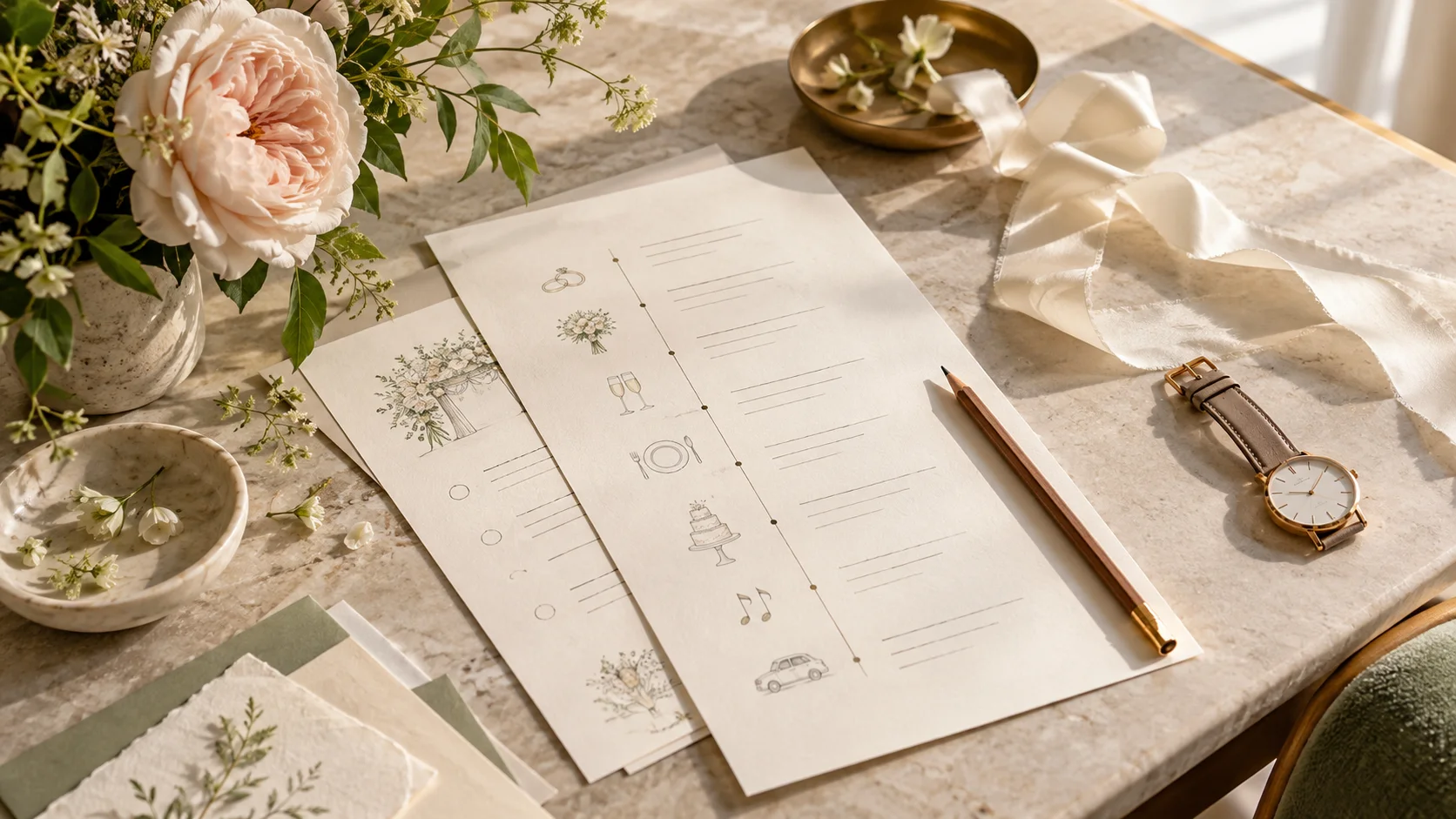
A useful wedding timeline is more than a list of attractive times. It tells each person where to be, what must already be ready, and who makes the next thing happen. The ceremony may begin at 3 pm, but that single fixed point affects travel, photographs, meals, supplier access and the last shuttle home.
This guide gives you a complete method and one worked example. The example assumes a 3 pm ceremony, nearby reception, photographs after the ceremony and a seated evening meal. It is an illustration, not a recommended schedule for every wedding. Your venue, ceremony rules, daylight, transport, accessibility needs and suppliers should decide the final times.
Start with five fixed points
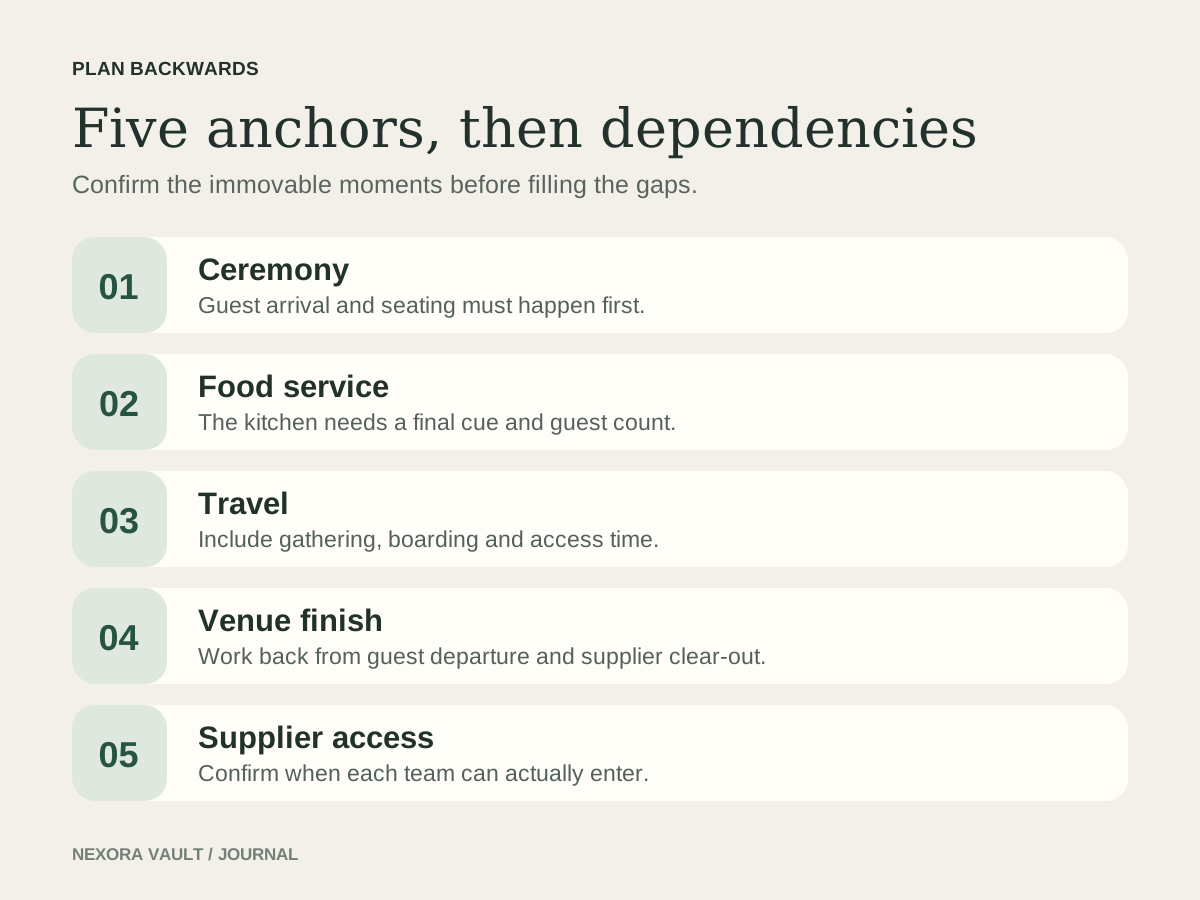
Before you fill an hour-by-hour template, ask the venue and suppliers to confirm five things: when the ceremony space is available; when guests can arrive; the ceremony start time; when food service can begin; and when the venue must be clear. Add any immovable travel departure, religious service, sunset portrait or entertainment time. Put these in one column and label them confirmed, provisional or decision needed. A provisional time should never quietly become an instruction to a driver or caterer.
For each fixed point, ask what must happen immediately before it. Guests need to be seated before the ceremony starts. A caterer needs a final count and access before service. A photographer may need the couple and family gathered before a group photograph. Work backward from those dependencies instead of copying somebody else's schedule.
Make a working schedule before a guest schedule
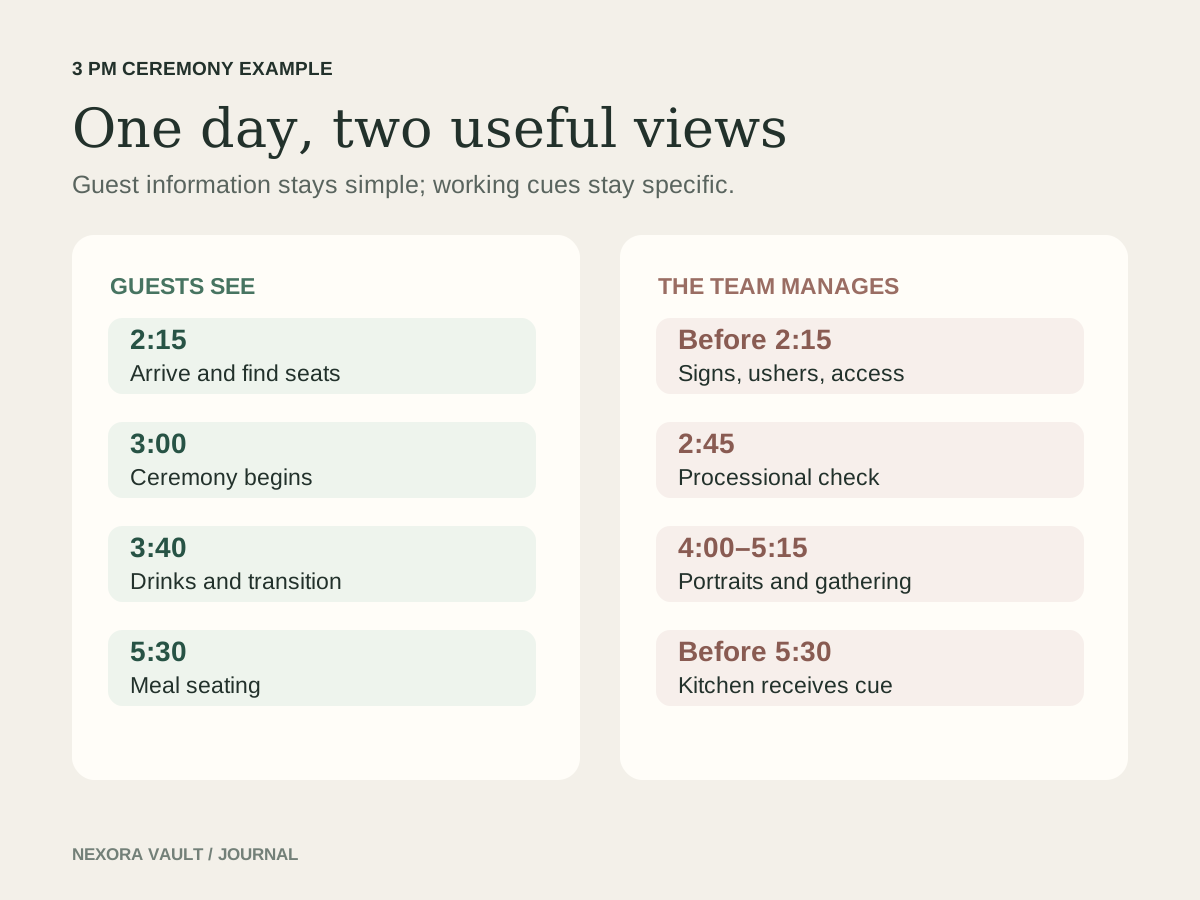
You will usually need two views of the same day. The working schedule includes supplier arrival, set-up, addresses, named owners, decision points and fallback contacts. The guest schedule includes only what guests need: where to arrive, when the ceremony starts, meal or reception transitions, transport and useful accessibility information. A guest does not need to see the florist's loading time or a private portrait list.
The distinction prevents a common mistake: filling a pretty one-page timetable with so much operational detail that nobody can scan it. Keep your master document detailed, then make a shorter guest version. If plans change, update both from the same confirmed source. A shared file can help, but decide who owns the final version and when it is locked for printing.
A worked example for a 3 pm ceremony
Imagine a ceremony and reception at neighbouring venues, with a ten-minute walk or short transfer. There is no first look, the couple takes photographs afterward, and guests have drinks while portraits happen. Use these times to expose the dependencies, then change every one that your suppliers advise is unrealistic.
- 9:00 am — preparation begins. The couple and attendants have a room, food and a clear place for outfits and details. Hair and make-up timing comes from the actual team, not a generic template.
- 12:15 pm — lunch and a readiness check. Someone checks clothing, rings, vows, accessibility arrangements and transport. Build in time to solve a missing item without stealing from the ceremony.
- 1:45 pm — final portraits or departure preparation. If photographs happen before travel, the photographer confirms the shot list and location. If they do not, this becomes protected breathing room.
- 2:15 pm — guests begin arriving. Welcome signs, ushers and any transport drop-off point are ready. Tell guests the actual arrival window, not simply “3 pm.”
- 2:45 pm — guests seated; ceremony team checks. The officiant or venue lead confirms the processional order and signals when everyone is ready.
- 3:00 pm — ceremony. Duration varies by ceremony type. Confirm it with the person leading it rather than assuming thirty minutes.
- 3:40 pm — recessional and drinks. The couple, family and photographer have a named meeting point for portraits. Guests know where to go next.
- 4:00–5:15 pm — photographs and guest transition. Protect time for travel, group assembly and a short private pause. If family portraits run long, one named person can release guests to the next step.
- 5:30 pm — meal seating. The catering lead has the final cue; speeches are placed where the venue and speakers can support them.
- 7:30 pm — evening transition. Entertainment, room reset and any late arrivals have a plan. Confirm the actual finish and transport times with the venue.
This is a sequence, not a guarantee that each task will consume exactly the minutes shown. If the ceremony ends later, the portrait window may shrink. Decide in advance which photographs are essential, who can adjust the meal cue, and which optional moment can move. That makes the schedule resilient rather than merely tidy.
Add travel and buffers where they can be used
“Travel: 10 minutes” rarely means that everyone can leave at 4:00 and be ready at 4:10. Add the time to gather people, move mobility aids or clothing, load a vehicle, park, walk from the drop-off and find the next room. Ask your driver or venue for realistic estimates. Place a buffer beside the uncertain transfer or portrait block, not as a mysterious thirty minutes at the end of the day.
For outdoor plans, give the relevant supplier a weather decision time and a named alternative location. For guest transport, state pickup location as clearly as pickup time. Put the latest departure time in the working schedule; a guest timetable can show when to be at the pickup point. If a venue has a strict end time, work backward from the last guest departure and supplier clearance as well as forward from the ceremony.
Give every handoff an owner
The most useful extra column is who confirms this happens? Someone should know who holds the rings, releases the processional, gathers family for photographs, cues the meal and tells the driver the guest count. Avoid assigning every cue to the couple. Use a person who will be present, has the contact details and has agreed to the job.
One-page handoff notes can include: event, time window, owner, location, next person's contact and a fallback. Keep private phone numbers on the supplier sheet, not a public sign. A coordinator may manage this professionally; if you do not have one, make the roles explicit with your venue, trusted helpers and suppliers well before the day.
Turn the master plan into something guests can use
For a wedding weekend, guests may need more than the ceremony time: welcome drinks, departure point, brunch, dress guidance, accessibility information and whom to contact if delayed. Keep each entry short enough to scan on a phone or one printed page. Confirm dates, addresses, time zones for destination events, and whether a gathering is optional. If an event is invitation-only, do not put it on a timetable shared with everyone.
Our free Weekend Timetable lets you put up to six confirmed events into a guest-facing schedule and print an A4 or US Letter sheet. It does not book suppliers, manage seating or send invitations. For guest booklets, seating lists and name cards alongside the schedule, Gathered is a separate, broader tool. You can use the planning method in this article with a plain document or paper too.
Final review: read it like three different people
Read the final plan as a guest: can you find the right place and time without asking the couple? Read it as a supplier: do you know your access window, cue and contact? Read it as someone who may need extra time or a quieter route: is the travel or seating information usable? Ask one person unfamiliar with the plan to answer those questions. Fix anything they cannot find.
Then check the practical details one final time with the venue and suppliers. Put a version date on the master, distribute it to the people who need it, and keep one person responsible for last-minute changes. A good timeline leaves room for a wedding to feel like a celebration instead of a stopwatch.